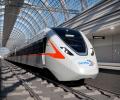
The project will be in three stages and sources indicate that the funding will be for the first stage of 107 kilometre from Sarai Kale Khan to SNB Urban Complex.

Adjuvants may be added to a vaccine to produce more antibodies and longer lasting immunity thus minimising the dose of antigen needed.

In India, itolizumab, known by the brand name Alzumab, has been priced at Rs 8,000 per vial. Most patients require four vials for Covid-19 treatment, taking the cost of the therapy to Rs 32,000.
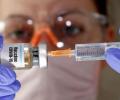
The Indian vaccine industry largely feels there are two ways in which vaccine innovation can be spurred - one, get a high price for the product and two, have the government buy a few hundred million doses of the product at a certain price.

22 companies won bids for the 31 contracts on offer; 15 were new entrants to the oil and gas business. Three years on, none of them have started production.
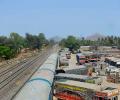
Revenue from freight operations also increased by 14 per cent to Rs 9,903 crore in September.

Going by the current market cap of Rs 83,451.15 crore, 7.33 per cent stake in BPCL is expected to be valued around Rs 6,117 crore.
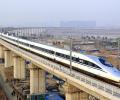
The first consortium includes Afcons Infrastructure, IRCON International and JMC Projects, while the second group of companies include NCC, Tata Projects and J. Kumar Infra Projects.

The Rail Land Development Authority has invited online bids from private players to redevelop the station into an integrated commercial, retail, and hospitality hub.
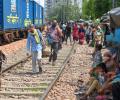
'The people, media and politicians are ready to listen to the troubles of Kangana Ranaut, but we are unwanted lives in the heart of Delhi.' Shine Jacob reports.
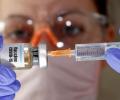
A model being considered is to have a combined cold chain approach - where the agricultural cold chain would be combined with vaccine cold chains.
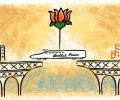
The projects - Delhi-Varanasi, Mumbai-Nagpur, Delhi-Ahmedabad, Chennai-Mysore, Delhi-Amritsar, Mumbai-Hyderabad, and Varanasi-Howrah - are expected to cost around Rs 10 trillion.

Built by the French railway technology company Alstom, it will host a 90-metre-long digital wall for train operation, said to be the second largest in Asia.
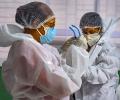
The bouquet of Covid-19 tests that most diagnostic labs are offering include antibody tests (blood tests), rapid antigen tests (point of care tests that detect the presence of an antigen from a nasal or throat swab in case of SARS-CoV-2), and reverse transcription-polymerase chain reaction (RT-PCR) tests.
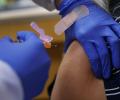
The global trials were halted after a study participant suffered a 'potentially unexplained illness, reports Sohini Das.
Older workers are headed for the VRS exit in larger-than-expected numbers even as unrest stirs over unrevised wage settlements.

A gamechanger for offices and factories, Shycocan, claims to be able to clear an area of 1000 square feet from coronavirus.

The board will now be headed by Vinod Kumar Yadav as chairman and CEO, and it will have four other members.
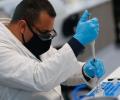
The Centre has also contacted five domestic and three multinational vaccine makers to understand how soon a candidate vaccine against Covid-19 will be ready.
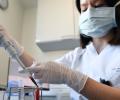
Many companies globally are working on plasma research to develop and manufacture hyperimmune globulin therapies from plasma donations.
